



Field service management software helps contractors manage mobile job tracking, technician scheduling, dispatch automation, customer communication, invoicing, and payments from one connected platform.
For HVAC, plumbing, electrical, roofing, cleaning, landscaping, and other service businesses, the goal is simple: keep the office, field team, customers, and billing process working from the same operational playbook.

Without the right system, contractor operations tend to scatter across phone calls, spreadsheets, text messages, paper work orders, disconnected calendars, and separate invoicing tools.
That works when the business is tiny. It starts cracking when call volume increases, technicians are spread across multiple jobs, and customers expect fast updates.
What Is Field Service Management Software?
Field service management software is an operational platform used to manage jobs, schedules, dispatching, technicians, customers, estimates, invoices, and payments.
Instead of forcing office staff to manually coordinate every moving part, FSM software gives the business a central system for tracking work from the first customer request through final payment.
For growing contractors, that means fewer dropped details, faster communication, cleaner scheduling, and better visibility into what is happening in the field.
Why Mobile Job Tracking Matters
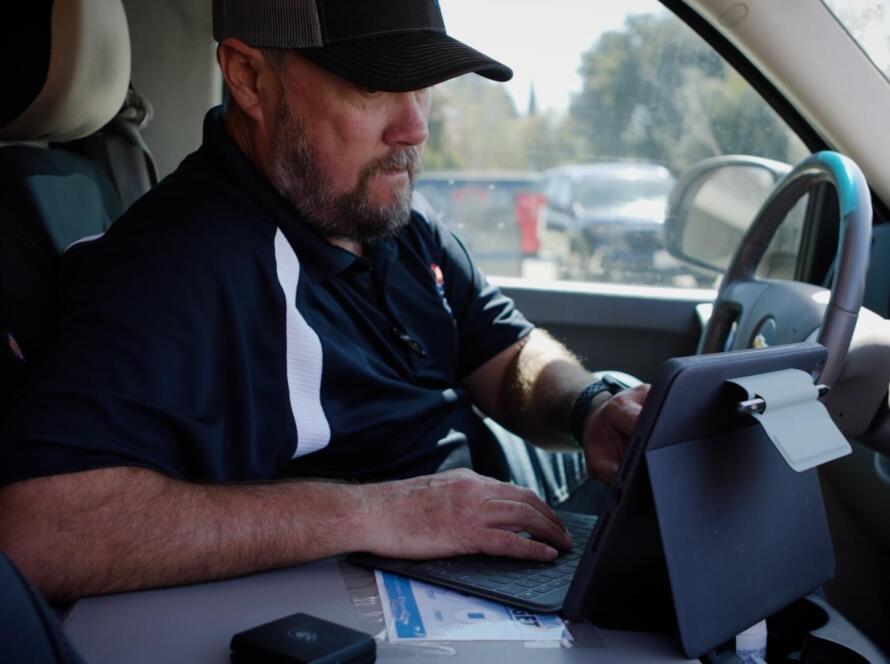
Mobile job tracking gives technicians, dispatchers, and business owners real-time visibility into active work.
Technicians can view job details, update status, add notes, upload photos, collect signatures, and close out work from the field. Office staff can see progress without chasing updates by phone.
That matters because field service operations move fast. A delayed update can create missed appointments, billing delays, confused customers, or dispatching mistakes.
Job Tracking
Track each job from request to estimate, dispatch, completion, invoice, and payment.
Mobile Workforce Management
Give technicians access to schedules, customer details, service notes, and job updates from the field.
Dispatch Automation
Assign work faster based on availability, location, urgency, and technician capacity.
CRM & Customer Management
Keep customer history, job records, estimates, communication, and service locations organized.
Invoicing & Payments
Create invoices, send payment requests, and reduce the delay between completed work and collected revenue.
Operational Reporting
Review job volume, technician productivity, revenue trends, and follow-up opportunities.
How Contractor Job Tracking Improves Daily Operations
Contractor job tracking is not just about knowing where technicians are. It is about giving every job a clear status, owner, timeline, and next step.
When that information is visible, office staff can answer customer questions faster. Technicians know what they are walking into. Managers can spot delays before they become customer complaints.
Good job tracking also helps reduce administrative drag. The less time your team spends hunting for updates, the more time they can spend booking work, supporting customers, and closing revenue.
Who Should Use Field Service Management Software?
Field service management software is especially valuable for contractors managing recurring appointments, emergency calls, technician routes, estimates, invoices, and customer follow-up.
Common use cases include:
- HVAC contractors managing seasonal maintenance and emergency calls
- Plumbing companies dispatching technicians across multiple service areas
- Electrical contractors handling estimates, work orders, and invoicing
- Roofing companies coordinating inspections, proposals, and project updates
- Cleaning companies managing recurring service schedules
- Landscaping businesses balancing routes, crews, and customer requests

Mobile job tracking helps contractors connect field work, office coordination, customer updates, and billing in one operational workflow.
Choosing the Right Field Service Platform
The best field service management software depends on your team size, service model, budget, workflow complexity, and growth plans.
Some contractors need a simple platform for scheduling, estimates, and payments. Others need advanced dispatching, reporting, recurring service agreements, integrations, or multi-location support.
Popular platforms contractors often compare include Jobber, Housecall Pro, ServiceTitan, FieldEdge, and Simpro.
The wrong platform can create unnecessary complexity. The right platform should fit how your business actually operates — not force your team into a workflow that looks good in a sales demo but falls apart in the field.
Need help choosing the right contractor software?
CIRRIUSbusiness helps contractors evaluate field service platforms, map workflows, and choose systems that support real operations instead of adding another digital mess to manage.
Field Service Software Should Make the Business Easier to Run
Field service management software should not just digitize chaos. That is how teams end up with prettier screens and the same operational problems underneath.
The right system should help your team schedule faster, dispatch smarter, communicate clearly, invoice sooner, and make decisions with better data.
For contractors trying to grow beyond manual coordination, mobile job tracking is not a luxury feature. It is the foundation for cleaner service operations.
Popular Field Service Management Software Platforms
Choosing the right field service management software depends on your company size, workflow complexity, service model, growth goals, and operational requirements. While every contractor's needs are different, the following platforms are among the most widely used solutions in the field service industry.
Jobber
Popular among small and growing service businesses looking for an easy-to-use platform for scheduling, dispatching, customer management, invoicing, and payments.
Housecall Pro
Designed for residential service contractors that need strong scheduling, technician management, automated communication, and field invoicing capabilities.
ServiceTitan
Built for larger and more complex service operations that require advanced reporting, call tracking, dispatching, sales workflows, and multi-location management.
FieldEdge
Well-known in HVAC and service industries for combining dispatching, customer management, service agreements, and QuickBooks integration.
Simpro
Often selected by commercial contractors and field service companies that require project management, asset tracking, inventory control, and advanced operational workflows.
Not Sure Which Platform Fits Your Business?
Every field service platform has strengths, limitations, and ideal use cases. The best solution for a five-technician HVAC company may be completely different from what works for a multi-location electrical contractor or commercial service operation.
CIRRIUSbusiness helps contractors evaluate software options, compare workflows, identify operational bottlenecks, and select platforms that align with both current needs and future growth plans.
Field Service Software Strategy
Ready to clean up your contractor operations?
CIRRIUSbusiness helps service contractors evaluate, configure, and improve field service management software for mobile job tracking, dispatch automation, CRM, invoicing, and payments.